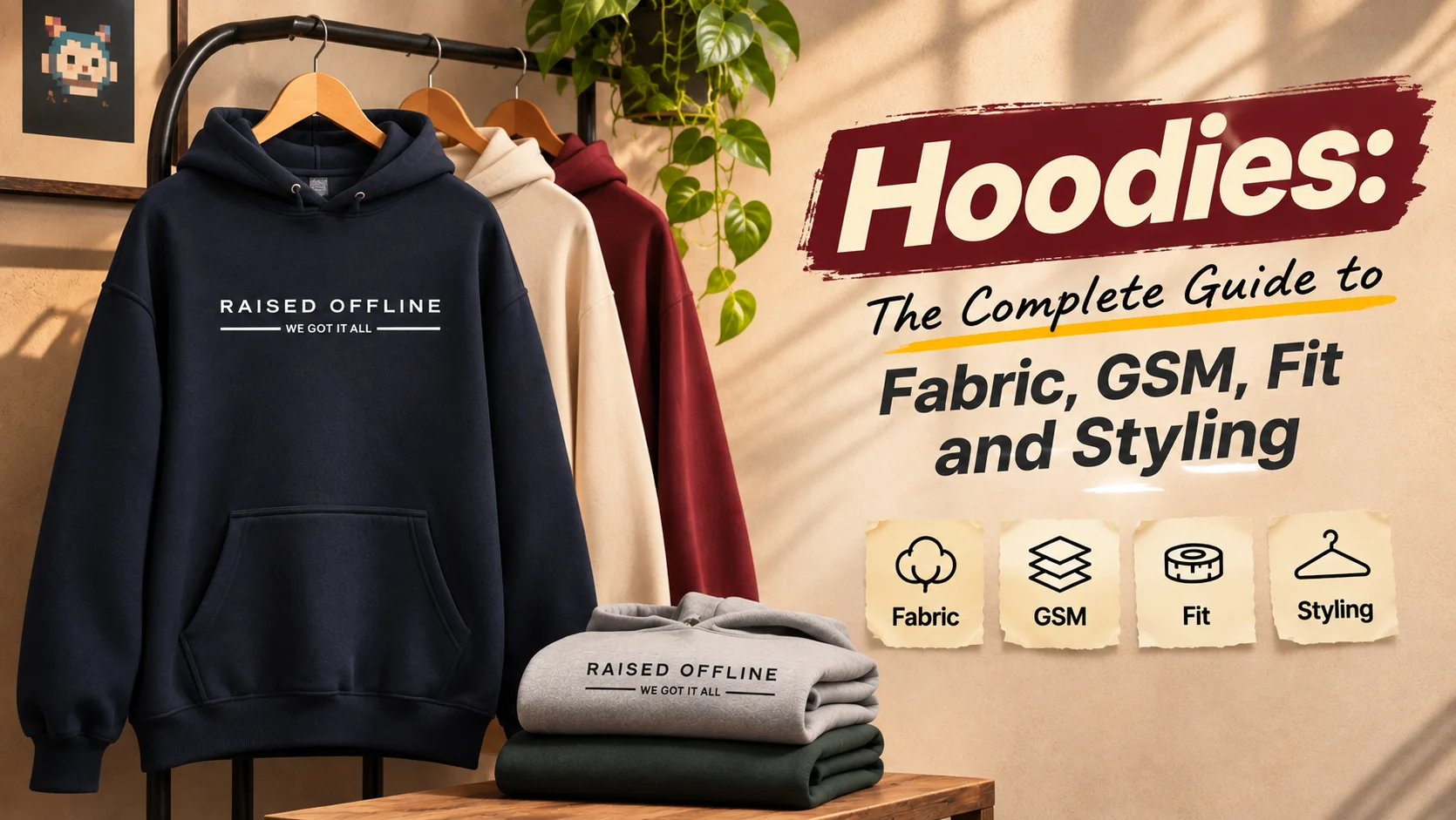
What Is a Hoodie?
A hoodie is a sweatshirt featuring an attached hood, generally designed to provide additional coverage and comfort.
Most hoodies come with a few recognisable features:
- Attached hood: Provides additional coverage and may include adjustable drawstrings.
- Long sleeves: Usually finished with ribbed cuffs.
- Front pocket: Commonly designed as a kangaroo pocket.
- Relaxed or regular fit: Offers room for comfortable movement.
- Ribbed waistband: Provides a finished look and helps the garment sit comfortably.
Hoodies are available in different fabrics, weights, fits and designs. They are worn across casual fashion, sportswear and streetwear, making them a versatile wardrobe essential.
Different Types of Hoodies
Not every hoodie looks or feels the same. Its design and construction can vary depending on how it is intended to be worn.
Here are four common types of hoodies worth knowing.
1. Pullover Hoodies
Pullover hoodies are among the most recognisable hoodie styles.
They do not have a front zipper and are worn by pulling them over the head. Most feature a kangaroo pocket at the front, along with ribbed cuffs and a waistband.
Their straightforward design makes them easy to pair with jeans, joggers, cargo trousers and other casual clothing.
2. Zip-Up Hoodies
Zip-up hoodies feature a front zipper that allows them to be opened or closed.
They are particularly convenient for layering because you can wear them open over a T-shirt or zip them up when you want additional coverage.
They offer more flexibility when transitioning between indoor and outdoor settings.
3. Oversized Hoodies
Oversized hoodies feature a deliberately relaxed silhouette with additional room around the chest, shoulders and body.
They are commonly associated with streetwear and can be styled with baggy jeans, relaxed trousers and sneakers.
Unlike simply buying a larger size, an oversized hoodie is constructed to create a particular silhouette.
4. Regular-Fit Hoodies
Regular-fit hoodies offer a more conventional silhouette without being excessively tight or loose.
They provide enough room for comfortable movement while maintaining balanced proportions around the shoulders, chest and waist.
One of their biggest advantages is versatility. Regular-fit hoodies work with different casual outfits and can be worn across everyday situations.
If you prefer clothing that feels comfortable without being excessively loose, a regular-fit hoodie is a practical choice.
Understanding Hoodie Fabrics: Which One Should You Choose?
Fabric is one of the most important factors to consider when buying hoodies.
The material affects softness, breathability, weight, maintenance and the overall wearing experience.
Here are three commonly used hoodie fabrics.
1. Cotton Hoodies
Cotton is one of the most popular fabric choices for everyday clothing, including hoodies.
A 100% cotton hoodie offers a natural-feeling fabric with good breathability and a comfortable feel against the skin.
Cotton hoodies are particularly suitable for people who prefer natural fibres over synthetic alternatives.
However, cotton quality depends on more than its composition. Fabric construction, yarn quality, knitting and finishing also influence the final product.
When purchasing cotton hoodies, check the actual fabric composition rather than relying on general product descriptions.
2. Polyester Hoodies
Polyester is a synthetic fibre commonly used in sportswear and casual clothing.
It is generally lightweight, quick-drying and relatively resistant to wrinkles.
Polyester is also frequently blended with cotton to combine characteristics of both materials.
The right choice depends on what you prioritise: fabric composition, comfort, maintenance or intended use.
3. Cotton-Polyester Blend Hoodies
Cotton-polyester blends combine natural and synthetic fibres.
Depending on the blend ratio and construction, they can offer a balance of softness, durability, shape retention and ease of maintenance.
However, not all blended hoodies offer the same experience.
Always check the fabric composition before purchasing so you understand what you’re actually getting.
What Is GSM in Hoodies and Why Does It Matter?
If you’ve been shopping for hoodies, you have probably come across the term GSM.
GSM stands for Grams per Square Metre. It measures the weight of fabric per square metre and is commonly used to describe whether a fabric is lightweight or heavyweight.
In simple terms, GSM helps you understand how substantial a hoodie fabric is.
Understanding Different Hoodie GSM Levels
Hoodies are available in different fabric weights depending on their construction and intended use.
Lightweight hoodies
These generally use lighter fabrics and are suitable for layering or relatively mild weather.
Midweight hoodies
Midweight fabrics offer a balance between weight and comfort. They can work well for everyday casual wear.
Heavyweight hoodies
Heavyweight hoodies use more substantial fabrics and generally offer a thicker, more structured feel.
They are often preferred by people who want a more substantial garment for cooler weather.
Is a Higher GSM Hoodie Always Better?
Not necessarily.
A higher GSM indicates heavier fabric, but it does not automatically mean better quality.
Other factors matter, including:
- Fabric composition.
- Knitting and construction quality.
- Stitching and finishing.
- Fabric softness.
- Fit and garment construction.
A well-made midweight hoodie can be a better choice for certain uses than a poorly constructed heavyweight one.
The right GSM depends on your preferences, climate and intended use.
Is a 300 GSM Hoodie Good?
A 300 GSM hoodie offers a substantial fabric weight that sits towards the heavier end of everyday casual hoodie options.
It can provide a more structured feel compared with lighter alternatives.
However, the actual wearing experience depends on the fabric composition and construction.
For example, a 300 GSM cotton hoodie with brushed fleece construction offers a different feel from a 300 GSM unbrushed fabric.
If you prefer a hoodie with a more substantial feel rather than a lightweight layer, 300 GSM is a specification worth considering.
What Is Brushed Fleece in Hoodies?
Brushed fleece is a fabric construction commonly used in sweatshirts and hoodies.
The inside surface of the fabric is mechanically brushed to raise fibres, creating a softer, fleece-like texture.
This gives the inside of the hoodie a cosy feel and makes brushed fleece a popular choice for cooler weather.
Brushed fleece hoodies are worth considering if you prioritise a soft inner surface and a comfortable wearing experience.
However, the warmth and feel of a hoodie also depend on its fabric weight, composition and overall construction.
When comparing hoodies, check whether the product specifically mentions brushed fleece rather than assuming all heavyweight hoodies have the same inner finish.
How to Choose the Right Hoodie
Finding a good hoodie involves more than selecting a colour or design.
The fabric, GSM, fit and construction all contribute to how the garment looks and feels.
Here are five factors worth checking before making a purchase.
1. Check the Fabric Composition
Start by checking whether the hoodie is made from cotton, polyester or a blend.
If you prefer natural fibres, look for a hoodie with a clearly specified cotton composition.
A 100% cotton hoodie is a straightforward choice if natural fibre composition is important to you.
2. Understand the GSM
Check the fabric weight to understand whether you’re buying a lightweight, midweight or heavyweight hoodie.
Remember that GSM should be considered alongside fabric construction and composition.
For instance, a 300 GSM brushed fleece hoodie offers a different wearing experience from a lighter, unbrushed alternative.
3. Choose the Right Fit
Hoodies are available in different fits, including regular, relaxed and oversized.
A regular-fit hoodie offers a balanced silhouette, while an oversized hoodie provides additional room and a more relaxed appearance.
Think about how you want the garment to sit on your shoulders, chest and waist.
Choose a fit that complements your everyday wardrobe rather than selecting a size based exclusively on current trends.
4. Look at the Construction
Pay attention to the details that contribute to the overall finish:
- Stitching quality.
- Ribbed cuffs.
- Waistband construction.
- Hood design.
- Pocket finishing.
These details influence the garment’s appearance and overall wearing experience.
5. Check the Size Chart
Never rely exclusively on the size label.
Compare the garment measurements with a hoodie you already own and find comfortable.
Pay particular attention to chest width and garment length.
This is especially important when buying hoodies online, as sizing can differ between brands.
How to Style Hoodies
One of the biggest advantages of hoodies is how easily they fit into everyday outfits.
You don’t need an elaborate wardrobe to style one well.
Here are five combinations worth trying.
1. Hoodie with Jeans
This is a classic casual combination.
Pair a regular-fit hoodie with straight-fit or relaxed jeans and sneakers for an easy everyday outfit.
Neutral colours work particularly well if you prefer a minimal appearance, while graphic designs can add more personality.
2. Hoodie with Joggers
If comfort is your priority, pair your hoodie with joggers.
This combination creates a relaxed outfit that works well for travelling, casual outings and everyday wear.
You can choose matching colours for a coordinated appearance or experiment with contrasting shades.
3. Hoodie with Cargo Pants
Cargo trousers and hoodies work particularly well together if you prefer streetwear-inspired outfits.
The combination offers a relaxed appearance with enough room to experiment with footwear and accessories.
Pair neutral-coloured hoodies with contrasting cargo trousers for a balanced outfit.
4. Hoodie with Shorts
Hoodies can also be worn with shorts for a more casual look.
This combination works particularly well when the weather is mild and you want something comfortable without wearing multiple layers.
Keep the outfit simple with everyday sneakers.
5. Layering with a Hoodie
A hoodie can be layered underneath a jacket or worn over a basic T-shirt.
This adds depth to an outfit while allowing you to adjust your clothing according to the weather.
A regular-fit hoodie works particularly well for layering because it maintains balanced proportions without adding excessive bulk.
Hoodies for Men and Women: How to Choose the Right Fit
Hoodies are worn by people across different age groups and personal styles. Many contemporary designs are unisex, meaning they are made to be worn by both men and women.
Rather than focusing exclusively on gender-specific labels, pay attention to the garment’s measurements and intended fit.
Hoodies for Men
Men commonly pair hoodies with jeans, joggers, cargo trousers and casual sneakers.
Regular-fit hoodies are a versatile choice for everyday wear, while oversized designs offer a more relaxed streetwear aesthetic.
If you prefer a balanced everyday silhouette, look for a hoodie that sits comfortably around the shoulders and chest without appearing excessively loose.
Hoodies for Women
Hoodies for women can be styled with jeans, leggings, shorts, skirts and casual trousers.
Depending on the desired look, a hoodie can be worn as a standalone piece or layered with other clothing.
A regular-fit unisex hoodie offers flexibility if you prefer a conventional silhouette rather than an excessively oversized appearance.
The most important thing is to check the size chart and choose measurements that match your preferred fit.
How to Take Care of Your Hoodie
Proper care can help maintain the appearance and feel of your hoodie over time.
Here are some basic care practices:
- Check the garment’s care instructions before washing.
- Turn the hoodie inside out before putting it in the washing machine.
- Use cold water and a suitable detergent.
- Avoid excessive heat when drying.
- Do not iron directly over printed designs.
- Store it in a clean, dry place.
Different fabrics and prints may require different care methods, so always follow the manufacturer’s instructions.
Frequently Asked Questions About Hoodies
1. What is the best fabric for a hoodie?
Cotton is a popular choice for everyday hoodies because of its natural feel and breathability. Polyester and cotton-polyester blends are also common. The best option depends on your comfort preferences and intended use.
2. What does 300 GSM mean in a hoodie?
300 GSM means the fabric weighs 300 grams per square metre. It generally falls into the heavier fabric category for casual hoodies, although the final feel depends on construction and composition.
3. Is a 300 GSM hoodie good for winter?
A 300 GSM hoodie can be a suitable option for cooler weather, particularly when it features brushed fleece construction. However, the warmth you experience also depends on fabric composition, fit, layering and outdoor temperature.
4. What is the difference between brushed fleece and regular fabric?
Brushed fleece has an inner surface that is mechanically brushed to create a soft, raised texture. This gives it a cosy feel compared with an unbrushed surface.
5. Are cotton hoodies better than polyester hoodies?
Neither is universally better. Cotton offers a natural feel and breathability, while polyester is generally quick-drying and relatively resistant to wrinkles. Your choice should depend on your preferences and intended use.
6. What is the difference between regular-fit and oversized hoodies?
Regular-fit hoodies offer a balanced silhouette with conventional proportions. Oversized hoodies are intentionally designed with additional room around the body and shoulders for a more relaxed appearance.
7. How should a hoodie fit?
A regular-fit hoodie should sit comfortably around your shoulders and chest without feeling restrictive. The sleeves should provide adequate coverage, and the waistband should sit comfortably around your waist.
8. How do I choose the right hoodie size?
Check the brand’s size chart and compare the chest and length measurements with a hoodie you already own. This is more reliable than choosing a size based only on your usual clothing size.
Final Thoughts
A good hoodie is more than just another layer of clothing. It is a combination of fabric, construction, fit and everyday versatility.
Whether you prefer a lightweight option for layering or a heavyweight cotton hoodie for cooler days, understanding these factors helps you make a more informed purchase.
The right hoodie should feel comfortable, fit naturally and work with the clothes you already own.
At Raised Offline, we believe everyday clothing should combine comfort with personality.
Our hoodies feature 100% cotton fabric, 300 GSM brushed fleece construction and a unisex regular fit, making them a comfortable option for days when you want something a little more substantial.
Available in sizes XS–3XL, they’re designed for people who prefer a comfortable, balanced fit without going oversized.
Explore the Raised Offline hoodie collection and find a design that fits your everyday style.
Leave a Reply